





Vale do Ave, Portugal's textile heartland

In northwest Portugal, the Ave River flows through a region that, for decades, was synonymous with work, factories, and textiles.
The Ave Valley is not just a geographical reference. It is the name of a region that, throughout the 20th century, became one of the most important textile hubs in the Iberian Peninsula. Cities like Guimarães, Vila Nova de Famalicão, Santo Tirso, Vizela, and Barcelos grew alongside factories, dye houses, and looms, and with them grew a knowledge that we now recognize in the textiles we buy and use.
It is difficult to talk about Portuguese textiles without mentioning the Ave Valley.
A region shaped by water
Before mechanization, rivers were the first drivers of the textile industry.
In the Ave Valley, the abundance of water, both from the river and the humid climate characteristic of Minho, created the natural conditions for the development of the first mills and, later, the first industrial facilities. The air humidity, which we tend to see as an inconvenient characteristic of the North Atlantic climate, was in fact a real advantage: it helps maintain the stability of the fibers during the production process and contributes to the uniformity of finishes and dyes.
What seems accidental often has a precise explanation.
From artisanal tradition to industrial factory
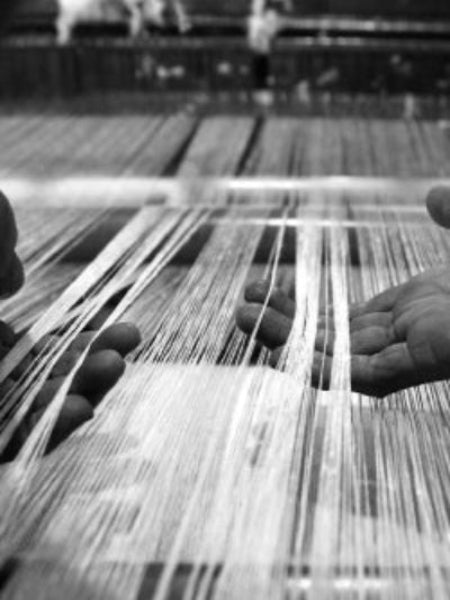
The transition from manual loom to industrial production did not happen overnight.
In the Ave Valley, this process developed over decades, from the mid-19th century and with greater intensity throughout the 20th century, as families adapted their knowledge to the rhythm of new machines and new market demands.
The result was an industry that grew without losing its character: demanding, detailed, with its own unique work culture. Factories specialized, some in cotton, others in linen, others in finishes, and this specialization created a technical density difficult to find elsewhere.
This is where much of what we now call Portuguese textile excellence was born.
Knowledge that cannot be improvised
What distinguishes the Ave Valley is not just the scale of production. It is the depth of knowledge that has accumulated over generations.
Knowing how to choose the right fiber. Knowing when the dyeing is perfect. Knowing how a finish will behave after several washes. These are technical details that are not learned from manuals; they are learned with time, with experience, and from those who have been through it before.
Many of the production managers in factories in this region grew up within the industry itself. There are factories where knowledge has been passed from foremen to workers, from generation to generation, for decades. This is, perhaps, the true capital of this region.
The Ave Valley today
The textile industry of the Ave Valley did not stand still.
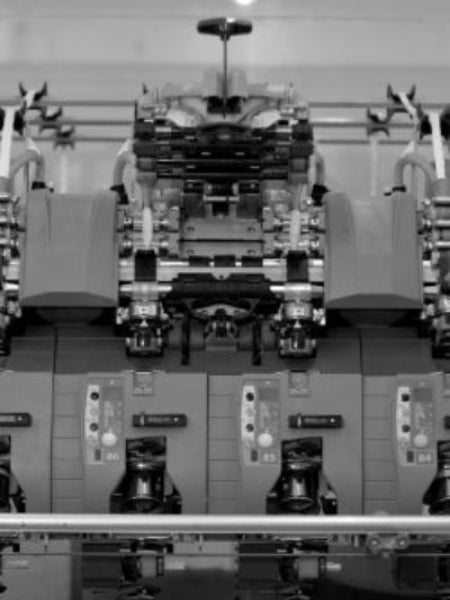
Contrary to what might be expected in a region with such a rich history, the sector adapted: it invested in technology, sustainability, certifications, and more efficient production processes. Many factories today work for leading European brands, with rigorous quality standards and a technical capability that continues to be recognized internationally.
Portugal is today one of the main European exporters of home textiles, and the Ave Valley is, in large part, responsible for this.
At HEPO, we work with several brands and manufacturers with roots in this region and tradition. Because we believe that origin matters, that accumulated knowledge makes a difference, and that it is possible to find real quality without having to look far.
If you want to know more about what makes Portuguese textiles different, you can start by reading why Portuguese textiles continue to make a difference.
Stay a while. Make yourself at home. Explore our selection of Portuguese home textiles